You want to volunteer with children in Africa. Then you start reading…
- Orphanage tourism.
- Volunteers doing jobs they are not trained for.
- Children getting attached to people who leave a few weeks later.
Suddenly, a trip you were excited about comes with a question: could something you mean well actually do harm?
It is a fair question. And if you are considering volunteering with Better Me in Kenya, we want you to ask it.
Volunteering with children can be ethical when the work puts children first, follows local leadership and gives volunteers appropriate, supervised roles. A criminal background check matters. So does training. But neither makes every placement a good idea.
Here in Kisumu, our core partner is the Korando Educational Center, where we support ongoing education and activities alongside the local team. We also work with other schools, families and community partners, and closely with the STATE DEPARTMENT FOR CHILDREN SERVICES and the Kisumu Children Remand Home.
That is the work you are joining. And it comes with responsibilities.
What makes volunteering with children ethical?
Start with a simple question: would this work still exist if no international volunteers came?
At Better Me, yes. Our Kenyan team and partners set the priorities. Volunteers contribute to that work according to their skills, the time they have and what is actually needed.
You might support a learning activity, help a local coach with a sports session or bring professional experience that is useful to the team. The right role depends on the person and the program. Wanting to help is a good starting point. It is not a qualification for every job.
Ethical volunteering also means accepting that some parts of the work are not yours to do. A child’s private history is not something you need to know to help with an activity. Being friendly does not make you their counsellor. Paying a volunteer fee does not give you access to every setting.
Children have their own lives, relationships and wishes. A good program makes room for those, rather than building everything around the visitor’s experience.
When does volunteering become unethical?
There are warning signs worth taking seriously:
- A program offers immediate access to children without checks or preparation.
- Visitors are encouraged to become substitute parents or primary caregivers during a short stay.
- Volunteers take on teaching, counselling or social-work responsibilities beyond their competence, without appropriate professional oversight.
- Children’s difficult experiences become stories or photographs used to sell the trip.
- Local staff are pushed aside so visitors can feel important.
- Activities are created for volunteers even when they do not meet a real need.
None of this becomes acceptable because the volunteer has a good heart.
The concerns about orphanage volunteering are real, too. UNICEF’s guidance on child-safe practices discourages volunteering in residential care and warns about repeated attachments to departing visitors. It recommends supporting community-based work and says people without professional training should not work directly with children.
We take that seriously. Background checks alone do not answer those concerns. What volunteers do, who supervises them and whether the work supports stable care all matter.
Safeguarding starts before your flight
At Better Me, preparation begins before you arrive in Kenya.
Volunteers must complete a criminal background check and our video onboarding course before travelling to join us. The course includes safeguarding preparation. Volunteers also sign our child-safeguarding code of conduct and complete safeguarding orientation before contact with children.
Then comes onboarding on the ground. You meet the team, learn how the work runs and understand the expectations attached to your role.
We have a safeguarding officer, child protection policies and safeguarding protocols in place. This gives the team a structure for preventing harm, raising concerns and responding to them.
It also gives you people to turn to. You are not expected to figure out a sensitive situation alone. If something worries you, bring it to the team and safeguarding officer. Listening, asking and following the process are part of being a responsible volunteer.
These requirements apply even if you have worked with children before. Knowing your own workplace does not mean you already know ours.
Local professionals lead the sensitive work
Our team knows Kisumu. They know the partners, the families and the local systems in which we work. Our social workers bring the experience and relationships that child protection work requires.
Volunteers work within that structure. They do not independently manage social-work cases, make child protection decisions or provide professional counselling without the appropriate qualifications.
You can be useful without taking over. Supporting an activity well, preparing materials or contributing a relevant skill can give the team practical help. Sometimes that is exactly what is needed.
Safeguarding also means accepting a boundary without needing to negotiate it. If the team says a task, conversation or setting is not appropriate for your role, follow their guidance.
Korando is at the heart of our work
Korando Educational Centre is our core partner in Kisumu. It is a school with its own teachers, routines and relationships. Children come here to learn, make friends, play and get on with being children.
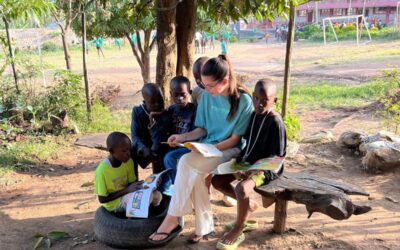
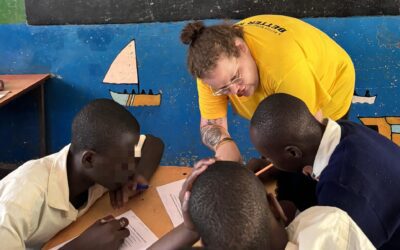
When you volunteer at Korando, you join that everyday life. Depending on current needs and your experience, you might support reading or English activities, help with art, join a sports session or contribute to life-skills activities alongside our team.
The teachers know their students. Our team works with them to understand where extra support is useful. That is where your contribution starts: listening to the people who are already there and helping with something that fits.
The children’s education continues after your stay. Your role is to support that continuity. A learning activity should fit the school’s work, and a new idea should be discussed with the team before you put it into practice.
The same safeguarding preparation, boundaries and expectations apply here. A familiar school setting does not make children’s privacy or wellbeing any less important.
Korando shows what ethical volunteering looks like in the everyday: local educators leading, volunteers contributing and children getting on with their lives. Our partnership with the remand home is another part of our work, with a particular focus on family reintegration.
Why we work with the Remand Home
Our relationship with the Kisumu Children Remand Home is an important part of this story. Every week we facilitate life-skills and language classes for the children that are currently held here.
We work closely with the Children Officers who are in charge of the facility. When the court authorises a child’s release, we are often requested to assist with the reintegration back into their family.
Our role is to support children returning to family life safely, with their best interests guiding the process. Returning home is not automatically the right answer in every circumstance. Decisions belong with the responsible authorities and professionals, taking the child’s situation into account.
This is work that requires social-work expertise, trust and cooperation. It is not something a visiting volunteer takes charge of after an introduction.
Working with a residential setting also deserves scrutiny. The purpose of our involvement matters: helping children move towards a normal life, while supporting the professionals responsible for them.
We are a local organisation doing ongoing work. Volunteers can come alongside that work and their role is shaped by it.
Children deserve privacy and ordinary childhood
There is another part of ethical volunteering that can be easy to overlook: what you share afterwards.
A child can enjoy a game, have a good laugh or be proud of something they made without their personal history becoming public.
You do not need a painful backstory to appreciate them. And a meaningful experience for you does not give you permission to publish their name, image or circumstances.
Follow the team’s rules on photography, consent and sharing. Sensitive settings need particular care. If you are unsure, ask before taking or posting anything.
The same goes for relationships. Be warm, be present and be reliable within your role. Avoid promises you cannot keep. Children should not have to manage an adult’s wish to feel needed.
Can a short stay be responsible?
Length matters, but it is not the only question.
A short stay is not a reason to take on a caregiving role or start something children will depend on after you leave. A longer stay does not remove the need for checks, competence and supervision either.
The useful questions are: what can you contribute in the time available? Does it fit an existing program? Who holds responsibility when you go home?
At Better Me, placements depend on current needs, your experience and your time with us. Local staff and partners remain responsible for the ongoing work. Joining us does not guarantee access to every activity, including sensitive work at the remand home.
Questions to ask before you volunteer
If you are comparing volunteering opportunities in Africa, ask each organisation:
- Who leads the work locally?
- What background checks and safeguarding preparation are required?
- Who is responsible for safeguarding, and how do I raise a concern?
- Which responsibilities are reserved for trained staff?
- How are children’s privacy and relationships protected?
- Does the work strengthen family and community life?
- What continues after I leave?
You deserve clear answers. So do the children involved.
Come ready to join the work
We love welcoming people to Kisumu. There is plenty of room here for learning, friendship, useful contributions and the kind of everyday moments you remember long after your flight home.
There is also serious work behind it: our team, our social workers, our safeguarding officer, our partners and the relationships built over time.
You do not need to arrive with all the answers. Come willing to listen, prepare properly and respect the people who know the work.
Explore volunteering with Better Me in Kenya and tell us about your skills and the time you have. We can discuss where you fit.